AI Industry Deep Dive — Week of 2026-07-01
What happened in AI this week, analyzed through the lens of news, market data, and regulation.
Article
🎯 This Week in AI
SpaceX’s $60B acquisition of Cursor signals that proprietary developer experience now outweighs general infrastructure value.
🌟 Must-Read of the Week
SpaceX's $60B acquisition of Cursor
This deal proves strategic buyers prioritize specialized coding tools over broad AI infrastructure, reshaping valuation logic.
📊 Macro Pulse
Sentiment deteriorated into a persistent risk-off regime throughout late June. The daily score slid from -0.36 to a weekly low of -0.47 on June 27 as geopolitical tensions and tariff concerns dominated market narratives. This macro headwind created sharp divergence among AI equities. NVIDIA’s steep 6.6% weekly decline on June 30 contrasted with Amazon’s +3.2% gain and Salesforce’s robust 5.2% surge. While mega-cap names like Alphabet held ground with modest gains, the broader environment pressured high-beta hardware plays. Capital rotation is currently driven by defensive positioning rather than growth optimism.
📰 This Week's Headlines
- Hugging Face launches Community Evals to decentralize benchmark reporting on its Hub
- Google NotebookLM adds 60-second TikTok-style AI video summaries for Ultra and Pro subscribers
- AWS launches $1 billion forward-deployed engineering org to embed agents within client companies
- Base44 rolls out own AI model after Wix acquired the vibe-coding platform for $80 million
- X unveils hosted MCP server to let AI tools connect directly to its API
- Anthropic introduces Claude Science workbench running existing models without gating or new training
- Acti launches agentic keyboard for iOS and Android that takes actions on behalf of users
- OKX opens AI agent marketplace allowing autonomous hiring, payment, and reputation building
- Proton upgrades privacy chatbot Lumo with image recognition and generation capabilities in version 2.0
- Netflix uses AI-generated Gene Wilder voiceover in upcoming Willy Wonka reality show trailer
- Riverside adds AI tool to turn existing video and podcast content into newsletters
🔍 Deep Dives
The Inevitability of Specialization Over Generalist Models

The structural driver enforcing this shift is the No Free Lunch theorem, which mathematically proves that no single general-purpose optimization algorithm outperforms all others across every conceivable problem. Consequently, systems with finite resources achieve superior results by trading breadth for a narrow, high-fit concentration on specific domains rather than attempting universal applicability. This biological and economic reality dictates that the consistent path to outperformance is specialization. Generalist models struggle with the complex, domain-specific constraints of real-world enterprise tasks. The conventional expectation that greater capability and broader applicability are natural companions has been invalidated by evidence showing that breakthroughs in critical domains like protein structure prediction and enterprise migration are achieved by systems engineered for single tasks rather than expanding generality.
Leading providers are pivoting away from raw compute power and generalist models to offer vertical-specific solutions. Anthropic focuses on workflow rather than new models to address the limitations of generalists in complex domains. Anthropic launched Claude Science, explicitly stating it is “not a new AI model” but a dedicated workbench for scientists that runs existing Claude models with prebuilt toolkits for genomics and protein structure. Similarly, Hugging Face introduced ScarfBench, an open benchmark specifically designed to evaluate AI agents on cross-framework migration tasks in Enterprise Java. This highlights the failure of generalist agents to preserve behavior and navigate runtime dependencies during modernization.
This strategic divergence is further evidenced by Base44, which launched its own proprietary model to support vibe-coding defensibility before being acquired by Wix for $80M. This signals that vertical integration and specialized tooling are becoming key valuation drivers over raw model capability. The market is responding positively to companies that offer these specialized tools rather than raw compute power. GOOGL rose +3.0% and AMZN +2.0%, while NVDA fell -6.6%. This indicates investor preference for workflow and utility plays over pure model speculation or hardware saturation concerns.
To track this fragmented landscape, Hugging Face launched 'Community Evals' to standardize cross-institutional evaluation. The Hugging Face datastore now holds approximately 229,000 evaluation results across more than 22,000 models and 2,200 benchmarks. This massive scale of decentralized evaluation efforts is necessary because generalist models are currently insufficient for complex enterprise modernization. Businesses must prioritize infrastructure from providers explicitly targeting their specific verticals.
The bottom line is that the market will fragment into distinct, domain-locked ecosystems where generalist models become obsolete for professional workflows. Anthropic’s Claude Science workbench and Hugging Face’s ScarfBench benchmark are essential infrastructure for verifying specialized performance over generic capability.
The Rise of Agentic Infrastructure and Autonomous Economy

The structural shift from passive information retrieval to active task execution is being defined by the deployment of standardized "plumbing" that allows AI agents to interface directly with enterprise systems and transact value without human intermediation. X has eliminated integration friction by launching a hosted Model Context Protocol (MCP) server. This enables AI assistants like Claude, Cursor, and Grok Build to connect directly to the platform using user permissions. The move removes the burden on developers to build custom servers and authenticate with the X API, allowing them to redirect engineering resources toward application logic. By offering this infrastructure, X is repositioning itself from a social hangout to a critical real-time information network for AI tools. It joins an expanding ecosystem of official MCP endpoints provided by GitHub, Slack, Notion, Stripe, and Salesforce.
Parallel to interface standardization, the financial rails for machine-to-machine commerce are being established through autonomous payment systems. OKX has launched OKX AI, a marketplace where AI agents can hire one another, settle payments using stablecoins, and build portable on-chain reputations. This infrastructure supports projections that "agentic commerce" will become a trillion-dollar market within five years, driven by micropayments and autonomous software transactions. OKX is leveraging its 150 million global users to transition from a crypto trading platform to a broader fintech entity. It is building the necessary financial layer for an economy where AI agents act as independent economic actors rather than mere tools.
Consumer-facing adoption of this agentic paradigm is accelerating through embedded interfaces that bypass traditional chatbot silos. Acti has introduced an agentic keyboard for iOS and Android that operates across all applications. This allows AI to take actions on behalf of users within existing workflows such as email, messaging, and social media. This approach addresses the fragmentation of user context by creating a persistent layer that belongs to the user rather than individual platforms. While Google NotebookLM is simultaneously experimenting with TikTok-style AI video summaries for Pro subscribers, Acti’s strategy highlights a broader industry pivot toward seamless, real-time automation within the software interfaces users already inhabit.
The convergence of standardized connectivity, autonomous payment rails, and embedded execution layers confirms that the agent economy has moved beyond theoretical discussion into operational reality. Developers must immediately adopt MCP to streamline integrations with major platforms. Businesses must evaluate their readiness for autonomous workflows by testing agents against rigorous benchmarks like ScarfBench to ensure reliable framework migrations. The bottom line is that X’s hosted MCP server and OKX’s agent marketplace are no longer experimental features but foundational infrastructure components that will dictate which companies capture value in the emerging machine-to-machine economy.
Valuation Shock: The SpaceX-Cursor Acquisition and Market Volatility
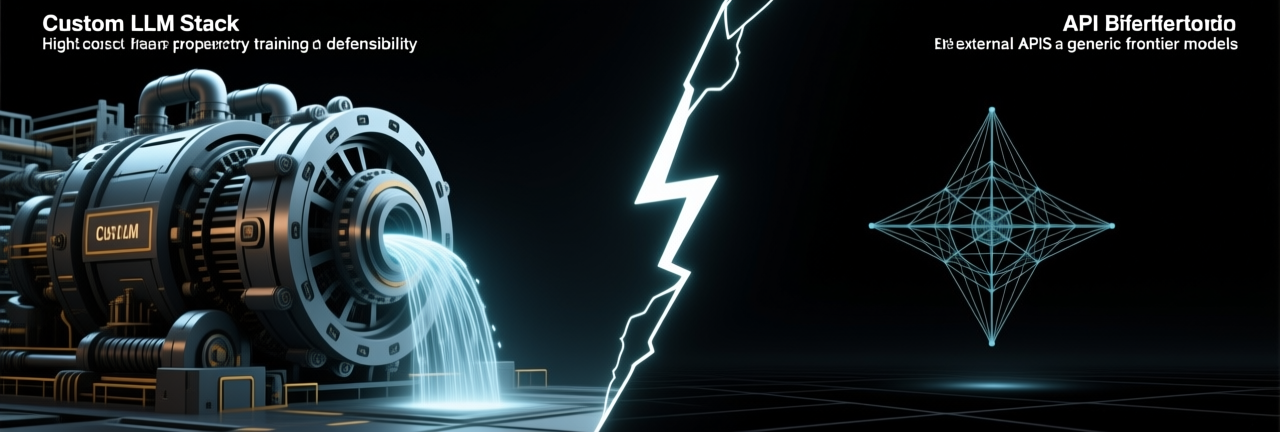
The acquisition of AI coding tool Cursor by SpaceX for $60 billion establishes a staggering new benchmark for software valuations. This contrasts sharply with the $80 million price tag Wix paid for vibe-coding platform Base44 just one year ago. This extreme disparity highlights a structural shift in how the market prices proprietary infrastructure. While Base44 was valued based on its nascent six-month-old team of eight, Cursor is now priced as a critical strategic asset akin to aerospace capabilities. Concurrently, this valuation shock has rippled through public markets. NVIDIA closed at $194.97, down 6.6% week-over-week, and Apple declined 2.0% amid bearish sentiment regarding memory costs. Despite broader tech weakness, Amazon rose 2.0%, suggesting selective capital allocation even as the industry grapples with the implications of such massive private consolidations.
The driving force behind this volatility is the urgent pursuit of defensibility through proprietary data and infrastructure rather than reliance on generic frontier models. As Base44 founder Maor Shlomo stated, “training and owning the model as part of [our] entire stack allows us a lot more optimizations on latency, cost, and efficiency.” This sentiment is echoed by Jonathan Userovici of VC firm Headline, who identifies data, distribution, and tech stack as the three key ingredients for AI startup survival. Consequently, companies are moving away from simple application layer acquisitions toward securing specialized tools that can outperform general models in specific tasks. Base44’s rollout of its custom LLM, Base1, trained on tens of millions of real user interactions, exemplifies this trend.
This bifurcation forces a hard choice on market participants. Only well-funded players with sufficient velocity can afford to train proprietary models. Smaller startups must rely on external APIs or specialized niches. The $60 billion valuation for Cursor signals that strategic buyers are prioritizing coding infrastructure over general model development. This potentially pressures hardware providers like NVIDIA as software efficiency improves. Investors face a distorted landscape where dev-tool valuations are inflated by high-profile deals rather than fundamental unit economics. Rigorous evaluation of total cost of ownership and data moats is required.
The market is now pricing in the reality that coding infrastructure is a defensible asset class, not just a software utility, as evidenced by SpaceX’s $60 billion commitment to Cursor.
🔗 Connecting the Dots
The acquisition of Cursor by SpaceX for $60B serves as the concrete catalyst linking these themes. It demonstrates that strategic buyers are prioritizing proprietary coding infrastructure over general models. This transaction validates the pivot away from "one model to rule them all" by proving that specialized vertical solutions—specifically in aerospace and defense engineering—hold higher strategic value than broad generalist capabilities. The deal signals a market correction where capital flows toward tools that enable deep, domain-specific automation rather than generic utility.
This shift directly fuels the rise of agentic infrastructure by establishing the demand side for autonomous execution. As SpaceX secures its proprietary coding stack, it creates an immediate need for the "plumbing" mentioned in the second theme—MCP servers and agentic keyboards—to operationalize these specialized models into active agents capable of transacting value and executing complex tasks. The valuation shock indicates that the future economy relies not on chatbots, but on specialized agents embedded within vertical-specific infrastructure. This drives investment toward the middleware that connects these niche models to autonomous workflows.
Watch for subsequent acquisitions by other defense or industrial conglomerates targeting coding and engineering tools. These moves will confirm whether this is an isolated anomaly or a structural shift in how strategic buyers value AI infrastructure.
💡 Takeaways
- For Business Leaders: The acquisition of Cursor by SpaceX for $60B signals a strategic pivot where aerospace and defense entities prioritize proprietary coding infrastructure over general model capabilities. Action: Audit your vertical-specific tooling stack to identify gaps where proprietary data moats can be built, prioritizing investments in specialized workflows that offer defensible advantages over generic compute power.
- For Developers: X’s launch of a hosted Model Context Protocol (MCP) server eliminates integration friction for AI assistants like Claude, Cursor, and Grok Build. Action: Integrate the X MCP endpoint into your current development pipelines immediately to bypass custom authentication logic, redirecting engineering hours toward building application-level agent functionality and reducing technical debt.
- For Investors: Market movements showing GOOGL up +3.0% and AMZN up +2.0%, contrasted with NVDA down -6.6%, indicate a clear preference for workflow and utility plays over pure model speculation or hardware saturation concerns as the industry fragments into domain-locked ecosystems. Action: Rebalance portfolios toward companies demonstrating successful vertical integration and specialized tooling adoption, while reducing exposure to generic hardware providers facing margin pressure from software efficiency gains.
- For Enterprise Architects: The introduction of Anthropic’s Claude Science workbench and Hugging Face’s ScarfBench benchmark highlights the insufficiency of generalist models for complex tasks. Action: Implement ScarfBench or equivalent specialized benchmarks in your QA processes to verify performance in domains like genomics and Enterprise Java migration, ensuring that any adopted AI infrastructure meets rigorous domain-specific reliability standards before deployment.
Period: 2026-06-21 to 2026-07-01 Sources: 9 RSS feeds, Trade2 (S&P500 ML analysis), GovTrack, OpenStates Analysis: qwen3.6:35b-a3b-q8_0 (multi-phase pipeline)